Pepper Pot in Portland, Food Tours in Georgetown: How Guyanese Cooks Are Turning Heritage Into a Hustle
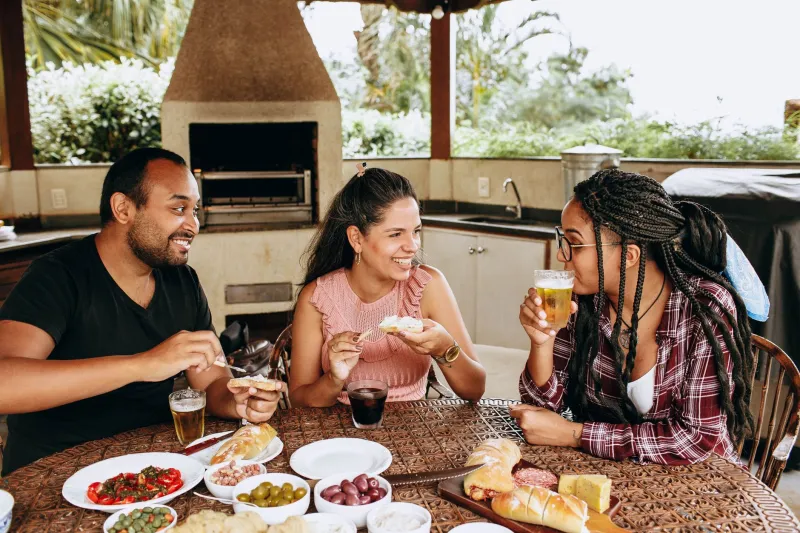
The dinner starts at 7. By 6:45, there are fourteen strangers crowded into Priya Chanderpaul's living room in Atlanta, holding glasses of mauby and trying to figure out if they're pronouncing "bora" correctly. Some are Guyanese. Some are married to Guyanese. Some found the event through a food newsletter and just liked the description.
By the time Priya sets down the cook-up rice, the conversation has taken on a life of its own.
"That's the thing about Guyanese food," she says later, clearing plates. "It doesn't just feed people. It starts something."
Priya runs Cane & Table, an Atlanta-based supper club that she describes as part dinner party, part cultural education, part straight-up good eating. Tickets sell out in under an hour. She's booked three months out. And she started the whole thing because she was tired of explaining her culture one dish at a time at potlucks.
The Supper Club Moment
Across the US, a small but growing cohort of Guyanese Americans are turning their kitchens — and their cultural knowledge — into income streams. The formats vary: intimate supper clubs, pop-up markets, cooking classes, catering operations, and increasingly, organized food tourism back to Guyana itself. What they share is a recognition that diaspora hunger for connection is both real and, yes, monetizable.
The supper club model has been particularly effective in cities with smaller Guyanese populations — places like Portland, Denver, and Nashville, where the community isn't large enough to sustain a dedicated restaurant but where curiosity about Caribbean food runs high. Hosts in these cities often find that their non-Guyanese guests become some of their most enthusiastic regulars.
"I had a woman from Ohio who came to one of my dinners, went home, and started making dhal on her own," says Marcus Persaud, who runs a similar operation in Nashville. "She texts me pictures sometimes. That's wild to me."
Marcus spent years working in restaurant management before launching his pop-up, Demerara Table, in 2021. He now does about two events per month, charges $95 per person, and has a waitlist. "I didn't expect it to turn into what it is," he says. "I just wanted to cook my grandmother's food for people who would appreciate it."
Taking It Back to the Source
If the supper club trend is about bringing Guyana to America, a newer wave of entrepreneurs is working the other direction — bringing Americans (and diaspora visitors) to Guyana through food-focused travel experiences.
Simone Alleyne left a marketing job in New York to build Taste the Essequibo, a small-group culinary tour company based out of Georgetown. Her tours run four to seven days and are built entirely around eating: market visits, home cooking sessions with local families, rum distillery tours, and what she calls "the street food circuit" — a rotating itinerary of vendors and spots that most tourists never find.
"The people who book with me are not coming to Guyana to see the sights," she says. "They're coming because they want to understand something. Food is how they get there."
Her client mix is telling: about 40% are Guyanese Americans visiting for the first time or returning after years away. The rest are food travelers — the kind of people who've already done Thailand and Mexico City and are looking for somewhere less mapped. For both groups, the experience of eating in someone's home in Berbice or watching roti get made from scratch in a Georgetown kitchen hits differently than any restaurant ever could.
Simone's tours are booked solid for the next two seasons. She's currently training two local guides and working on a partnership with a Georgetown hotel.
The Instagram Effect
None of this exists in a vacuum. The visual language of food content on social media has been enormously good for Guyanese cuisine's visibility — and for the entrepreneurs building businesses around it.
Creators who post Guyanese cooking content regularly report that their food videos consistently outperform everything else they make. There's something about the colors, the layering of flavors, the unfamiliarity-that-feels-somehow-familiar that makes people stop scrolling. Pepper pot, mettagee, cook-up rice, pholourie — dishes that most Americans have never heard of are racking up views and, crucially, turning curious followers into paying customers.
"I got my first supper club booking from a TikTok comment," Priya says. "Someone watched me make garlic pork and just asked, 'How do I come eat this?' So I figured out how to make that possible."
For entrepreneurs like Marcus, the content side of the business has become almost as important as the cooking itself. He spends time each week creating videos that contextualize the food — talking about the Indo-Caribbean and Afro-Guyanese culinary traditions that blend in a single dish, explaining why certain ingredients are used, telling stories about who taught him what.
"People don't just want to eat," he says. "They want to understand. That's what makes this more than a meal."
The Authenticity Question
It wouldn't be a piece about diaspora food culture without at least touching on the authenticity conversation — which, in Guyanese circles, can get lively fast.
Who gets to call their cooking "authentic Guyanese"? What happens when a dish gets adapted for American palates or American ingredient availability? Is a supper club in Atlanta the same thing as eating in someone's home in Georgetown?
Most of the entrepreneurs we spoke with are thoughtful about this. They're not claiming to replicate an experience that can only exist in one place. They're offering something adjacent: a doorway, a starting point, a reason to go deeper.
"I tell people upfront: this is my version of Guyanese food, shaped by my grandmother, my mother, and fourteen years of living in America," Priya says. "If it makes you want to go to Guyana and eat the real thing? Good. That's the whole point."
Simone, whose tours are literally rooted in the country itself, sees the diaspora-driven food movement as something genuinely generative. "When someone comes on my tour because they had Guyanese food at a pop-up in Brooklyn, that's a chain of connection," she says. "Every link matters."
Starting Your Own
For Guyanese Americans thinking about turning their kitchen skills into something more, the barriers to entry have never been lower — but the work is real. Most successful food entrepreneurs in this space started small: a few friends, a shared meal, a Venmo link. The business grew from the response.
The key, most of them say, is specificity. Don't just make "Caribbean food." Make your grandmother's specific pepper pot recipe. Tell that story. The specificity is what creates connection, and connection is what creates community — which, eventually, creates customers.
Or as Marcus puts it: "Cook what you know. Tell people why it matters. The rest tends to follow."