Swapping the Bay Area for the Demerara: Guyanese Tech Pros Are Betting Big on Home

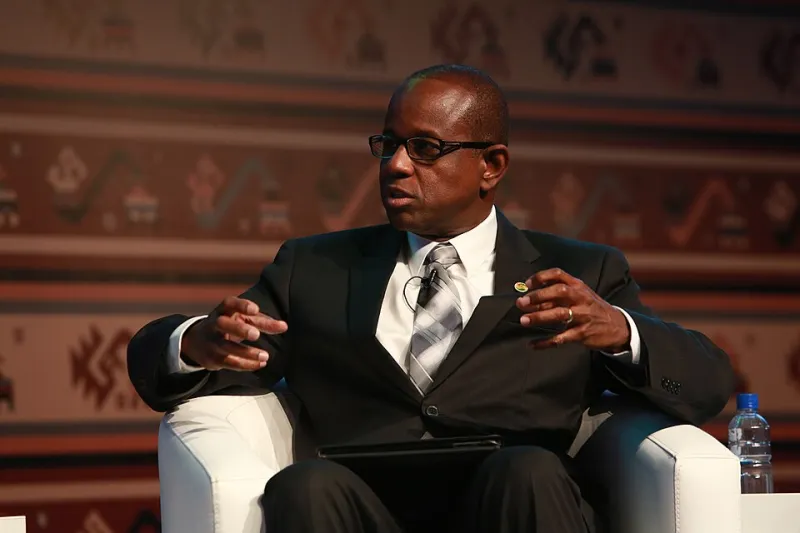
Photo: acrofan.com, CC BY-SA 3.0, via Wikimedia Commons
For years, the story wrote itself. Bright kid grows up in Guyana, earns a scholarship or scrapes together a visa, lands in New York or Toronto or London, and eventually finds a foothold in tech. Maybe they end up in San Jose, Austin, or somewhere along the 101 corridor, pulling a comfortable salary and sending remittances back to family. That was the script. But lately, some Guyanese tech workers are flipping it entirely — packing up their laptops, subletting their overpriced apartments, and heading back to Georgetown to build something from scratch.
It's not a flood. Not yet. But the trickle is real, and the people making this move are not struggling. They're engineers with resumes from Google and Amazon. They're product managers who've shipped features used by millions. They're choosing Guyana — not out of desperation, but out of something that looks a lot like vision.
The Pull Is Stronger Than It Used to Be
Ask anyone who's made the move and they'll tell you the timing feels different now. Guyana's oil boom has reshaped the economic conversation around the country, but the tech opportunity isn't just about petrodollars. It's about a country with a young population, growing internet penetration, an underdeveloped digital infrastructure, and very little competition. For entrepreneurs, that's not a liability — that's a wide-open lane.
Marcel Persaud, a 34-year-old software developer who spent eight years working for a fintech company in San Francisco, relocated to Georgetown eighteen months ago. He launched a small payments platform aimed at local small businesses and hasn't looked back. "In the Bay, I was one of ten thousand developers doing the same thing," he says. "Here, I'm one of maybe twenty people even thinking about this problem. That's energizing."
The cost calculation helps too. Rent in San Francisco for a one-bedroom? Easily $3,000 a month. In Georgetown's newer residential areas, you can find a comfortable place for a fraction of that. Office space, staff, and operating costs all compress significantly. For bootstrapped founders who aren't trying to chase venture capital, that compression can mean the difference between a side project and a real business.
Family Is Never a Small Thing
Beyond the economics, there's something harder to quantify pulling people back — and most returnees bring it up without being asked. Years of video calls on Sunday afternoons, missing weddings and funerals, watching parents get older on a phone screen. The Guyanese diaspora knows this guilt intimately. For some, the professional success eventually starts to feel hollow when weighed against the distance.
Kimberley Rampersaud left Guyana at 19, studied computer science in New Jersey, and spent a decade building a career in UX design before returning to Georgetown two years ago with her husband and two kids. "My children were growing up not knowing their grandparents," she says. "Not knowing the food, the sounds, the whole feeling of being Guyanese in Guyana. I didn't want to wake up at 60 and realize I'd traded all of that for a good benefits package."
She now runs a small design consultancy that works with both local businesses and international clients remotely. The remote work revolution, accelerated by the pandemic, made her transition infinitely more feasible. She kept several of her US-based clients, which meant her income didn't fall off a cliff the moment she landed at Cheddi Jagan International.
What They're Actually Building
The returnees aren't just freelancing from beachside cafes. Some are tackling genuinely ambitious projects. There's work happening in agritech — platforms connecting farmers to buyers and improving supply chain transparency in a country where agriculture remains a cornerstone of the economy. Others are working on e-commerce infrastructure, logistics software, and digital literacy programs for younger Guyanese.
A handful of returnees have started talking to each other, forming informal networks that are beginning to resemble an actual startup ecosystem. Co-working spaces have started appearing in Georgetown. The government has made some noise about creating a digital economy framework, though most entrepreneurs say they're not waiting on policy to move forward.
"I'm not building for the government's timeline," says Persaud. "I'm building because there's a market and I understand it better than anyone coming in from outside."
That insider advantage is something returnees lean on hard. They know how Guyanese businesses actually operate, how trust is built, what friction points exist in daily commercial life. They're not parachuting in with a solution built for a different context. They grew up here. That counts for a lot.
The Challenges Are Real — Don't Get It Twisted
None of this is a fairy tale. The returnees are candid about what's hard. Bureaucratic processes can be slow and unpredictable. Infrastructure gaps — inconsistent electricity, internet reliability in certain areas — create headaches that you simply don't face in a US tech hub. Access to local funding is limited; the venture capital ecosystem that exists in the US doesn't have a Guyanese equivalent yet. And recruiting local tech talent remains a challenge, partly because many of Guyana's best and brightest are still making the same outbound journey these returnees once made.
There's also a social adjustment that catches some people off guard. After years in the US, certain habits and expectations become baked in. Customer service standards, infrastructure reliability, the pace of daily life — all of it requires recalibration. "The first six months were genuinely difficult," admits Rampersaud. "I had to unlearn some of the impatience I'd picked up living in New York."
A New Kind of Diaspora Story
What makes this trend worth watching isn't just the economic angle. It's what it says about how the Guyanese diaspora is evolving. For generations, success meant building a life in North America or the UK. The hometown was a place you visited, sent money to, maybe retired to eventually. But a younger generation of Guyanese professionals is starting to rewrite that definition.
For them, success might mean being the person who builds the first scalable tech company headquartered in Georgetown. It might mean raising kids who speak Creolese without self-consciousness. It might mean being present — actually present — for the people and the place that shaped them.
Guyana is not Silicon Valley and won't be anytime soon. But for a specific kind of builder, with the right skill set and the right motivation, it might be exactly the right place to be right now. The country is at an inflection point, and some of its most capable sons and daughters are deciding they'd rather be in the room where it happens than watching from three thousand miles away.
The exodus, it turns out, runs in both directions.