From Bora and Bhaji to Bank Deposits: How Guyanese Home Cooks Are Cashing In Online
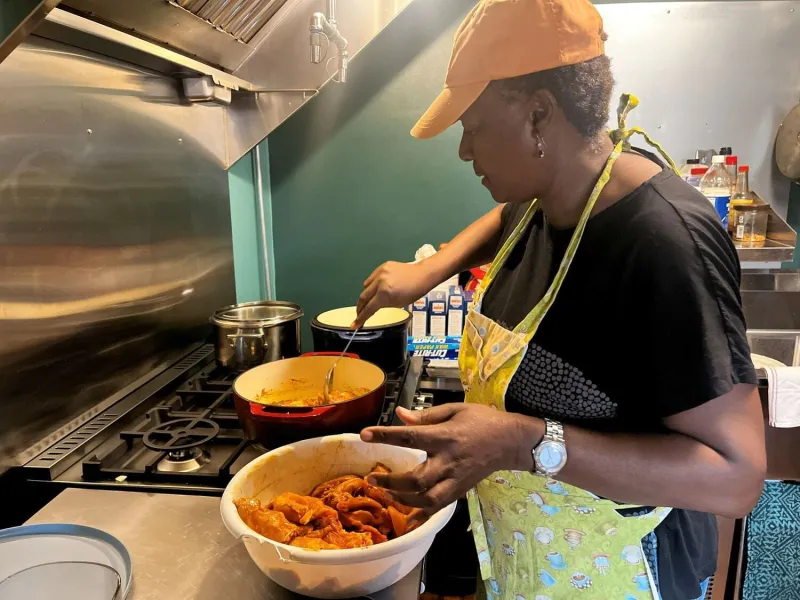
Photo: Caribbean woman cooking traditional food in modern kitchen with spices, via www.northcountrypublicradio.org
It usually starts the same way. A pot of cook-up rice for a friend's birthday. A tray of pholourie at the church fundraiser. Then somebody asks, can you make that for my daughter's baby shower? And just like that, a business is born.
Across the US — from Queens to Atlanta, from Orlando to the DMV — Guyanese Americans are doing something remarkable with the recipes they grew up watching their mothers and grandmothers make. They're monetizing them. And not in a small way.
We're talking meal prep subscriptions, weekend catering gigs, food trucks parked outside cricket tournaments, and TikTok shops moving frozen curry in bulk. The Guyanese kitchen abroad has officially become a business model.
Nostalgia Is the Most Powerful Marketing Tool You're Not Using
Ask any Guyanese person living in the US what they miss most about home, and food will come up before the weather, before the beach, and definitely before the traffic. That emotional pull is exactly what Shantie Persaud, a 38-year-old home cook turned catering entrepreneur based in the Bronx, figured out early.
"People don't just want the food," she says. "They want to feel like they're back home for a few minutes. That's what I'm really selling."
Shantie started selling containers of dhal and rice out of her apartment in 2019, mostly to coworkers who kept asking about whatever she brought for lunch. Within eighteen months, she had a full catering operation, a commercial kitchen rental arrangement, and a waiting list for her weekend cook-up specials. She now pulls in over $120,000 a year — without a brick-and-mortar location.
Her marketing strategy? Almost entirely word of mouth within the Guyanese community, amplified by a WhatsApp broadcast list that she describes as "basically my whole church plus their cousins."
The Diaspora Community Is Its Own Distribution Network
That's a pattern you hear again and again from Guyanese food entrepreneurs. The community itself functions like a built-in customer base and referral engine. Guyanese Americans are spread across major metro areas, but they stay connected — through cricket leagues, Hindu mandirs, churches, cultural associations, and increasingly, Facebook groups with tens of thousands of members.
For Marcus Gonsalves, a second-generation Guyanese American who launched a food truck in the Miami area three years ago, those networks were everything in the early days.
"I didn't run a single ad for the first six months," he says. "I just showed up at every Guyanese event I could find. One good Saturday at a cricket match and people are tagging you in posts, sharing your number. That's how it grows."
Marcus's truck, which specializes in Guyanese street food — pepperpot sliders, fried bake with saltfish, and what he calls his "curry everything" menu — now operates at festivals, private events, and pop-ups across South Florida. He's in conversations with a local food hall about a permanent stall.
Social Commerce Is Changing the Game
Beyond catering and trucks, a newer generation of Guyanese food entrepreneurs is leaning hard into social media as a direct sales channel. Instagram and TikTok have become storefronts, and the content isn't just promotional — it's cultural.
Take Priya Ramkhelawan, a 26-year-old content creator and cook based in New Jersey. Her TikTok videos showing her cooking traditional Guyanese dishes — narrated in a mix of Creole and American slang — have racked up millions of views. But views aren't the business. The business is her online shop, where she sells spice blends, curry kits, and a digital cookbook she put together herself.
"I noticed that people who looked like me weren't really represented in the food content space," Priya says. "So I just started cooking what I grew up eating and talking about it the way I actually talk. People connected with that."
Her spice kits — which include everything you need to make a proper Guyanese curry at home — sell out within hours of a restock announcement. She ships across the continental US and has a small but growing Canadian customer base.
What It Actually Takes to Make It Work
Before you go clearing out your kitchen and setting up a Venmo account, let's be real about the challenges. Food entrepreneurship is hard, and doing it from home or at a small scale comes with real hurdles.
Permitting and licensing is the big one. Cottage food laws vary dramatically by state, and what's allowed in Florida might not fly in New York. Anyone serious about turning their cooking into a business needs to research local health department requirements, look into cottage food exemptions, and understand when they'll need a licensed commercial kitchen.
Insurance is another thing people skip until they really, really shouldn't have. If you're catering events, you need liability coverage. Full stop.
And then there's the operational side — sourcing ingredients consistently, managing order volume, pricing correctly so you're actually making money and not just staying busy. Shantie laughs when she remembers her early pricing.
"I was charging what I thought was fair," she says. "I wasn't counting my time, my gas, my containers, the wear on my pots. I was basically working for free and feeling proud about it."
Her advice: price like a business, not like a favor.
The Bigger Picture
What's happening in Guyanese American kitchens across the US is part of a broader trend of diaspora communities turning cultural capital into actual capital. But there's something specific happening in the Guyanese community that makes it worth paying attention to.
Guyanese cuisine sits at a genuinely unique intersection — South Asian, African, Indigenous, and Caribbean influences all layered together in a way that's hard to find anywhere else. In a food culture increasingly hungry for authenticity and story, that's a serious advantage.
The people who are winning in this space aren't just good cooks. They're storytellers. They understand that the food is the product, but the culture is the brand.
And if you've been sitting on your grandmother's recipe for metemgee or your mother's black cake, wondering if anyone outside the family would care — trust us, they would. They really would.