Because I Said So (And Because My Mother Said So Before That): Surviving the Guyanese Generational Divide
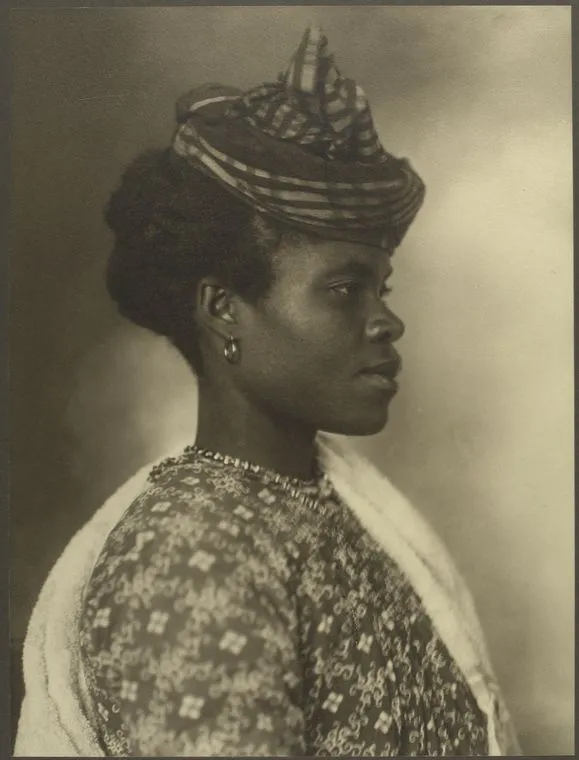
Photo: Own work extracted from public works produced and published by United States Federal Government, Public domain, via Wikimedia Commons
Somewhere in a split-level house in Queens, a Guyanese teenager is being told she cannot sleep over at her friend's house. The reason given? "Because." The teenager, armed with a full year of debate club and a strong Wi-Fi connection, asks for elaboration. Her mother, who crossed an ocean and rebuilt an entire life from scratch, does not feel that elaboration is owed.
This is not a crisis. This is just Tuesday.
For Guyanese immigrant families scattered across New York, Florida, Toronto, and everywhere in between, the generational communication gap is less a crack in the foundation and more a permanent feature of the architecture. It's the thing you step around every day, occasionally trip over, and somehow miss when you're no longer living under the same roof.
"Back Home" Is a Full Argument
The phrase "back home" does a lot of heavy lifting in Guyanese households. It's a rebuttal, a benchmark, a guilt trip, and occasionally a love language — all depending on the tone.
"Back home, children didn't talk back." "Back home, you'd already know how to cook by your age." "Back home, we didn't have time to be stressed."
For American-raised kids, "back home" can feel like a mythical place where everything was harder, everyone was tougher, and nobody apparently had feelings. But peel back the frustration, and what you're really hearing is a parent trying to make sense of a world that moved without asking permission. Guyana shaped them in ways they can't always articulate, and "back home" is sometimes the only shorthand they have.
The trick is learning to hear the translation underneath the words. "Back home, children didn't talk back" often means: I sacrificed a lot to give you the freedom to have opinions, and it's a little wild watching you use that freedom on me.
Not always. Sometimes it just means they're tired and you're being a lot. But still.
The Education Pressure Is Its Own Language
Let's talk about the grades conversation, because every Guyanese kid in America has had it at least forty-seven times.
You come home with a 91. A 91! In most households across this country, that is a cause for celebration, maybe even a trip to Applebee's. In a Guyanese household, a 91 opens a philosophical inquiry into where the other nine points went and what your plan is to retrieve them.
This is not cruelty. This is, in its own compressed and slightly stressful way, love. Education was — and often still is — one of the few reliable escalators out of poverty in Guyana. Your parents didn't push academics because they wanted to stress you out. They pushed because they watched education open doors that nothing else could. The 91 isn't a failure; it's a reminder that the door could open even wider.
The challenge for parents is learning to say that out loud. The challenge for kids is learning to ask. Neither side is naturally inclined to do the vulnerable thing. That's the real family tradition.
The Social Life Negotiations
Guyanese parents have a complicated relationship with American social culture, and honestly, who could blame them. From the outside, American teen social life can look like an elaborate series of opportunities for things to go wrong.
The sleepover debate is legendary. So is the "why can't I just go to the mall" debate, the "it's just a party" debate, and the timeless "I'm the only one whose parents said no" debate (spoiler: you were never the only one).
What's actually happening in these negotiations is a collision between two genuinely different philosophies of childhood. In many Caribbean households, the community raises the child, but the family guards the child. Privacy isn't always seen as a right — it's something you earn, slowly, over years of demonstrated trustworthiness. American culture, meanwhile, treats independence as almost a developmental milestone to be rushed toward.
Neither approach is entirely wrong. The Guyanese model produces adults who are deeply loyal to family and community. The American model produces adults who can advocate for themselves in a boardroom. Ideally, you end up with both. Getting there, though, involves a lot of front-porch standoffs.
The Things That Don't Need Explaining (But Probably Should Get One Anyway)
There's a whole category of Guyanese household rules that exist entirely without documentation.
Don't wear outside shoes inside. Don't waste food — ever. Greet every adult in the room when you walk in, even if you've never met them. Eat before you leave the house. Don't air family business. Bring something when you visit someone's home. Don't sit on the table. Say goodnight before you go to your room.
These aren't arbitrary. They're a compressed cultural code — a set of values about respect, hospitality, community, and resourcefulness that got handed down so many times they stopped coming with explanations. They just are.
The problem is that when you're twelve and American and your friend just walked into his house in muddy sneakers without anyone blinking, "because that's how we do it" feels thin. What Guyanese parents are slowly learning — and it is slow, because unlearning the assumption that context is obvious is genuinely hard — is that explaining the why doesn't weaken the rule. It actually makes the kid more likely to carry it forward.
Tell your daughter why you bring food when you visit. Tell her about the neighbor who helped your family when things were hard, and how the cassava bread your mother brought was the only thing that felt like home. She'll remember that story long after she's forgotten the rule.
Finding the Middle Ground (It Exists, We Promise)
The families that seem to navigate this best aren't the ones where the parents gave everything up or the kids abandoned their roots. They're the ones where both sides agreed — sometimes grudgingly, sometimes over a very long dinner — to stay curious about each other.
Guyanese parents who ask their kids about their American friendships, their school pressures, their social anxieties. Kids who ask their parents about Georgetown, about what music was playing when they were young, about what they were afraid of. These conversations are slow and sometimes awkward and occasionally interrupted by someone's phone. But they're how culture actually gets passed down — not through enforcement, but through genuine interest.
The generational gap in Guyanese households isn't a bug. It's the friction that makes the culture real. It's how you end up with a twenty-five-year-old in Atlanta who knows how to make cook-up rice from memory, keeps her shoes at the door, and still calls her mother every Sunday — not because she has to, but because somewhere along the way, the "why" finally clicked.
And if it hasn't clicked yet for your household — give it time. And maybe explain the shoes thing. That one's worth the conversation.