Tank Full, Cooler Ready: The Sacred Ritual of the Guyanese Grocery Run
Somewhere on the New Jersey Turnpike right now, there's a Guyanese family in a minivan. The cooler is in the trunk. The kids are in the back with headphones on. And the driver — probably Dad — has already mentally mapped out the parking situation at the store before they've even crossed the state line.
This is not an unusual Saturday. This is just life.
For Guyanese Americans scattered across cities like Atlanta, Houston, Hartford, and Orlando — places where Caribbean grocers are few and far between — the pilgrimage to a proper ethnic market isn't an inconvenience. It's a ritual. Part road trip, part cultural lifeline, part excuse to stock up on enough geera, dried shrimp, and cassava bread to last through the next three months of American suburbia.
The Geography of Longing
Ask any Guyanese family in the diaspora where the nearest "good" West Indian grocery store is, and they'll answer with the confidence of someone who has made the trip more times than they can count.
For families in central Pennsylvania, that might mean a two-hour drive to Philadelphia. For those in parts of North Carolina, it's a haul up to Richmond or all the way into the DC metro area. In the Midwest, Chicago's Devon Avenue corridor has become something of a pilgrimage site for Guyanese and Indo-Caribbean families across Illinois, Indiana, and even parts of Wisconsin.
"People come from hours away. We know them by name, we know what they're looking for," says Anand Ramphal, who co-owns a Caribbean grocery in the Bronx that draws customers from as far as Vermont and Delaware. "They don't just come in and grab two things. They come in with a list — a real list — and they spend serious money."
Ramphal estimates that out-of-town customers account for a surprising chunk of his weekend revenue. They buy in bulk. They buy duplicates. They buy things they didn't know they needed until they saw them on the shelf. Because when you're not sure when you'll be back, you don't leave anything behind.
It's Not Just About the Food
Let's be honest: this is never purely about groceries.
The grocery run is where you catch up with someone who knows your cousin back home. It's where you overhear a conversation in Creole and feel something loosen in your chest that you didn't realize was tight. It's where your mother holds up a bottle of Carib pepper sauce and says, "This is the right one," with the kind of authority that no Amazon review can replicate.
"My grandmother used to say that cooking is how we remember who we are," says Priya Seecharan, a second-generation Guyanese woman living outside of Charlotte, North Carolina. "And you can't cook right without the right ingredients. So yeah, we drive four hours round trip. Because the food has to taste like home, not like a substitute."
Priya's family makes the trip to a Guyanese-owned market in the DC area roughly every six to eight weeks. They pack a cooler, plan lunch at a Caribbean restaurant nearby, and sometimes meet up with family friends who are making the same run from different directions. What sounds like a chore becomes, in practice, a mini family reunion with a grocery receipt at the end.
The Economics of the Ethnic Aisle
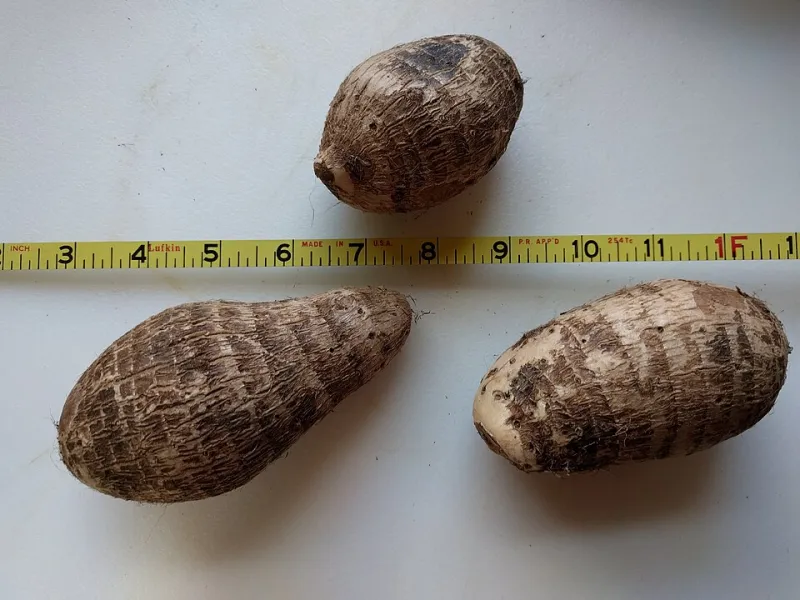
Importing specialty Caribbean produce and pantry staples to the US is no small logistical feat. Bora (long beans), bitter melon, ochro, fresh hot peppers, eddoes, and plantains don't exactly grow in New England. Getting them from Guyana, Trinidad, or regional wholesalers in Florida and New York to a store shelf in suburban America involves a supply chain that is, to put it kindly, temperamental.
"The hardest part is consistency," says Marcia Bacchus, who runs a small Caribbean market outside of Atlanta. "I can get something one week and then not see it again for a month. My customers understand, but it's still frustrating for everyone."
For store owners like Marcia, the business model is built on trust and loyalty rather than foot traffic. Customers who find a reliable source will return, religiously, and they'll bring their aunties and their neighbors. Word of mouth in the Guyanese community travels fast — especially in diaspora WhatsApp groups, where a single message saying "they have fresh bora at the place on Buford Highway" can trigger a minor stampede by Friday afternoon.
The margins on specialty Caribbean items can be thin, especially when competing with larger South Asian grocery chains that carry some overlapping products. But what those stores can't replicate is the curation — the specific, deliberate selection of items that speak directly to a Guyanese or Indo-Caribbean palate. That specificity is the whole point.
Can an App Really Replace All This?
Online grocery delivery has made genuine inroads in the Caribbean-American community over the past few years. Services that specialize in ethnic groceries — and even a few general platforms that have expanded their Caribbean inventories — have picked up customers who simply can't make the long drive work anymore.
But the reception is mixed.
"I tried ordering online a few times," admits Kevin Persaud, a Guyanese American living in suburban Minneapolis. "The dried items are fine. But I ordered plantains and they sent me something that looked like it had already been through a lot. You can't trust someone else to pick your produce. That's just the truth."
This is the wall that every grocery delivery platform hits with diaspora communities: produce selection is personal, almost sacred. The ability to squeeze a mango, smell a bunch of fresh thyme, or reject an eddoe that doesn't look right is not a preference — it's a skill, passed down through generations, that doesn't translate to a five-star rating system.
Some specialty online retailers have found a niche by focusing on non-perishable pantry items — pepper sauces, curry powders, canned goods, and packaged snacks — and leaving the fresh produce to the physical stores. It's not a complete solution, but it takes some pressure off the pilgrimage.
"I order my Mauby bark and my geera online now," Priya admits. "But I still make the drive for everything else. Some things you just have to do in person."
The Store as Community Center
What often gets overlooked in conversations about ethnic grocery stores is what they represent beyond the transaction. For many Guyanese Americans, especially those living far from established Caribbean communities, the grocery store is one of the few physical spaces where their culture is fully, unapologetically present.
Notices for cultural events get posted on the bulletin board near the entrance. Someone's always playing soca or chutney music from a phone behind the counter. The owner knows your mother's name. You run into someone you haven't seen since a cousin's wedding in 2019.
No amount of next-day delivery can recreate that.
So yes — the tank will get filled, the cooler will get packed, and the family will pile into the car for a drive that, by any rational measure, makes no logistical sense. But Guyanese Americans have never let logic get in the way of doing things right.
Some traditions aren't about efficiency. They're about showing up.