Wiring Money and Carrying Guilt: The Unspoken Financial Burden on Guyanese Americans
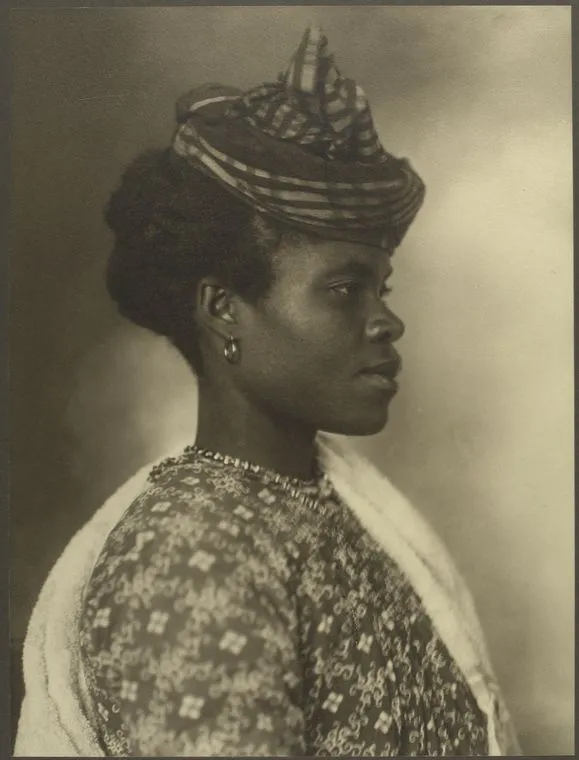
Photo: New York Public Library, No restrictions, via Wikimedia Commons
You land your first real job in the States. Maybe it's in healthcare, or you finally got that government position with benefits. You're renting a decent apartment, building credit, and quietly proud of yourself. Then your phone buzzes. It's an aunt back in Georgetown. The roof needs fixing. Could you send something?
If you're Guyanese American, you already know exactly how that sentence ends — and how it makes you feel.
This is one of those conversations the diaspora has been having in hushed tones for decades, mostly at family cookouts or over a plate of cook-up rice when the older folks aren't listening. But it deserves a real, honest airing out. Because the financial expectations placed on Guyanese immigrants living in the US are very real, often overwhelming, and almost never talked about publicly.
The Assumption That Comes With the Plane Ticket
There's a deeply rooted belief in many Caribbean households — Guyanese ones very much included — that once you "reach foreign," money starts flowing like the Essequibo. The reality, of course, is far more complicated. You're navigating student loans, sky-high rent in cities like New York, Miami, or Toronto's spillover cousins in New Jersey, health insurance, car payments, and trying to save something for a future that feels perpetually just out of reach.
But none of that is visible from across the ocean. What's visible is that you left. And leaving, in the cultural imagination, equals prosperity.
"People back home think because you're in America, you're rich," says Desiree, a 34-year-old nurse's aide living in the Bronx who asked us to use only her first name. "They don't see that I work double shifts and still can't afford my own place. They just see the US area code."
Desiree says she's sent money for everything from school fees to funeral expenses to a cousin's down payment on a small business — not always willingly, and almost always without being asked directly. "It's never a real ask," she explains. "It's just dropped into conversation. 'Things hard, you know.' And then you're supposed to figure out the rest."
The Guilt Is the Whole Point
What makes this dynamic so hard to unpack is that it's rarely about manipulation in a calculated, intentional sense. It's more about a cultural framework where collective survival is the default setting. Back home, when someone has more, they share. That's not a flaw — in many ways, it's beautiful. But it becomes complicated when the person who "has more" is actually stretched thin in ways the family back home can't see or fully understand.
"The guilt is built in," says Marcus, a 41-year-old IT professional in Maryland whose family is from the Berbice region. "You feel guilty for leaving in the first place. You feel guilty for having more, even when you don't have that much. And then you feel guilty for saying no. It's guilt all the way down."
Marcus has set what he calls "soft limits" — a fixed monthly amount he transfers to his mother, no matter what, with the understanding that it's what he can do and not a starting point for negotiation. "It took years to get to that system. And even now, it doesn't always hold."
When 'No' Feels Like Betrayal
The hardest part for many Guyanese Americans isn't the money itself — it's the relational fallout from saying no. Declining a request from family back home can result in being labeled selfish, ungrateful, or "too Americanized." It can fracture relationships that span generations. It can make you the subject of church whispers or the cautionary tale at someone's dinner table.
"I said I couldn't help with something one time — I genuinely didn't have it — and I didn't hear from that side of the family for almost two years," recalls Shondell, a 29-year-old from Queens. "Two years. Over money I didn't have."
This kind of social consequence keeps many people locked in a cycle of giving beyond their means, which has real downstream effects on their own financial health — retirement savings that never get started, emergency funds that stay empty, dreams that get deferred indefinitely.
Finding a Middle Ground That Actually Works
But here's the thing: plenty of Guyanese Americans have found ways to show up for their families without destroying themselves financially. It usually requires a combination of honesty, creativity, and some firm internal boundaries.
Some people have shifted from cash transfers to direct contributions — paying a utility bill online, purchasing school supplies and shipping them, or contributing to a specific goal rather than a general "send money" ask. This approach keeps the giving concrete and prevents funds from disappearing into an undefined need.
Others have banded together with siblings or cousins in the diaspora to create a shared family fund, spreading the responsibility across multiple people rather than letting it fall entirely on the one who "made it."
"My sister and I split everything now," says Desiree. "It changed my life. I don't feel like I'm drowning anymore, and my family back home still gets what they need."
Financial therapists who work with immigrant communities note that this kind of restructuring is healthy and necessary. Setting transparent expectations — even writing them down — removes the ambiguity that lets guilt fester. It also opens the door to conversations about long-term sustainability rather than reactive crisis management.
The Love Is Still There
None of this means Guyanese Americans don't want to help their families. Most of them desperately do. The connection to home runs deep — it's in the food they cook, the Creole they slip into on the phone, the way they tear up at a chutney song on YouTube at midnight. The desire to give back is genuine and rooted in love.
What's changing is the conversation around how that giving should be structured, what's realistic, and who gets to define the terms. The diaspora generation — particularly those born or raised in the US — is increasingly unwilling to accept guilt as a management tool. They want to help on their own terms, in ways that are sustainable and mutual.
"I want my family to be okay. I always will," says Marcus. "But I also want to be okay. And for a long time, those two things felt like they were in conflict. They don't have to be."
If you've been quietly carrying this weight, know that you're not alone — and that wanting to protect your own financial future isn't a betrayal of where you came from. It's how you make sure you can keep showing up, year after year, without burning out.
That's not being too Americanized. That's just being human.