Miles for Masala: The Lengths Guyanese Americans Will Go to Find the Right Ingredients
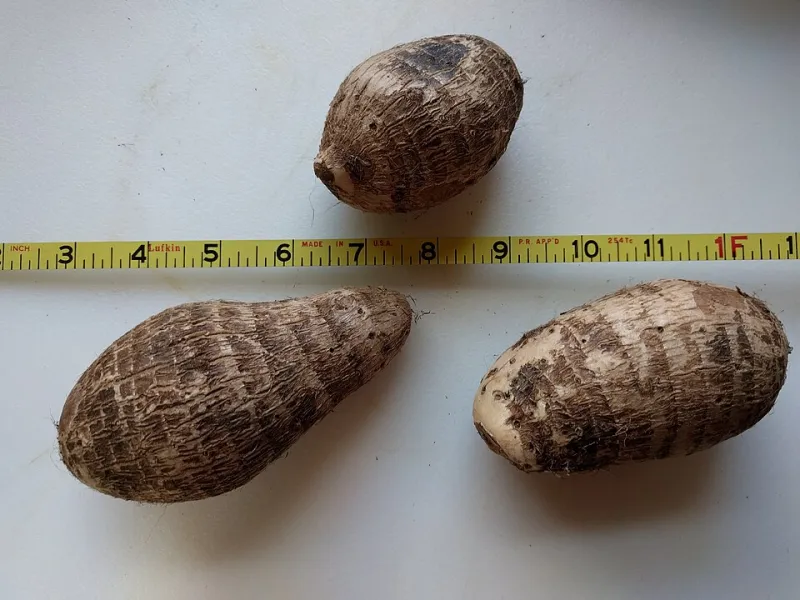
Photo: RoySmith, CC BY-SA 4.0, via Wikimedia Commons
Somewhere in suburban Maryland, Nadira Persaud is loading a reusable shopping bag with dried bora, a bag of split peas, and a container of shadow beni paste she specifically asked the shop owner to hold for her. She drove an hour and forty minutes to get here. She'll do it again next month.
"People think I'm crazy," she laughs. "My coworkers ask me why I don't just order online. But you can't smell a website. You can't squeeze a plantain through a screen."
Nadira isn't alone. Across the United States — from Richmond Hill in Queens to the suburbs of Atlanta, from South Florida to the Bay Area — Guyanese Americans are making what you might call the great grocery pilgrimage. A dedicated, sometimes exhausting, often joyful trek to find the ingredients that make their food taste like home.
Why the Regular Supermarket Just Won't Cut It
Walk into any mainstream American grocery chain and you might find plantains, maybe some frozen cassava, possibly a bottle of something labeled "Caribbean seasoning." For the Guyanese cook, that's a little like handing a painter one color and calling it a full palette.
Guyanese cuisine is a layered thing — shaped by African, Indian, Indigenous, Chinese, Portuguese, and Dutch influences, all pressed together over centuries on one thin strip of South American coastline. The ingredients reflect that complexity. You need the right kind of wiri wiri peppers, not just any hot sauce. You need fresh coconut milk, not the canned version that's been sitting on a shelf since last spring. You need curry powder that was actually blended in a Guyanese kitchen, not something manufactured for a generic "ethnic food" aisle.
"There's a difference between curry and Guyanese curry," says Devon Bacchus, who owns a Caribbean specialty market in the Bronx. "My customers know that. They've been cooking since they were eight years old standing next to their grandmother. They're not going to compromise."
Devon's shop, which he opened in 2018 after years working in food distribution, now draws customers from Connecticut, New Jersey, and Pennsylvania on a regular basis. He keeps a running list of who's coming in from where, partly for logistics, partly because he finds it remarkable.
"I had a family drive from Pittsburgh last month. Pittsburgh! They bought enough to last them three months and packed it in a cooler. That's dedication."
The Stores That Became Community Centers
What's happening in these specialty Caribbean markets is about more than groceries. Step inside on a Saturday morning and you'll find something closer to a social event. People catch up in the aisles. Someone's playing soca from a phone behind the counter. A regular customer who moved here from Berbice twenty years ago is giving unsolicited but entirely welcome cooking advice to a younger woman who just arrived from Georgetown last year.
These shops fill a gap that goes beyond food supply. They're one of the few physical spaces where the Guyanese diaspora can feel, even briefly, like the minority isn't the minority.
"This is where I come to feel like myself," says Cheryl Thomas, a nurse from Decatur, Georgia, who makes the drive to a Caribbean market in the Buford Highway corridor every few weeks. "I can talk the way I talk, ask for what I need without explaining what it is, and leave with a bag full of things that actually mean something to me."
Shop owners are acutely aware of this role. Many of them didn't open these stores purely as a business move — they opened them because they felt the absence themselves.
Maria Gonsalves started her shop in Miramar, Florida in 2015, initially as a side hustle alongside her full-time job. She was tired of driving forty-five minutes each way to find proper eddoes and green seasoning. "I figured if I needed it, other people needed it too," she says. She was right. Within two years, she'd gone full-time. She now employs four people and ships a curated box of pantry staples to customers in states where Caribbean markets are sparse — places like Iowa, Montana, and the Carolinas.
The Economics of Importing Home
Running one of these stores isn't simple. The supply chain for Caribbean produce is fragile and frequently frustrating. Fresh cassava, plantains, and bora have short shelf lives. Wiri wiri peppers are notoriously difficult to source in consistent quantities. And because these products serve a niche market, importers don't always prioritize them.
"I've had shipments delayed, shipments spoiled, shipments that just... disappeared," Devon says, with the resigned laugh of someone who's learned to build backup plans into his backup plans. "You have to have relationships. You have to know people who know people. It's not like ordering from a warehouse catalog."
Prices reflect this complexity. A pound of wiri wiri peppers at a specialty Caribbean shop can cost significantly more than a comparable pepper at a mainstream store, and customers generally understand why. They're paying for the sourcing, the relationships, the refrigeration, the risk the shop owner absorbed to get it there.
For diaspora families, the math still works out. Especially when you factor in what it would cost to fly back to Guyana for a visit, or what it costs — emotionally — to try to cook a proper cook-up rice with the wrong ingredients.
Adapting When the Shelves Are Bare
Even the most well-stocked Caribbean market runs out of things. And for Guyanese Americans living far from any specialty shop, improvisation is a survival skill.
Nadira has a whole mental catalog of substitutions she's developed over the years. Scotch bonnet peppers in place of wiri wiri when she can't find them. Homemade green seasoning blended from whatever fresh herbs she can find. Dried coconut reconstituted with hot water when fresh isn't available.
"You learn to make it work," she says. "But there's always something missing. Not enough to ruin it, but enough that you know."
Some families have turned to online communities — Facebook groups, WhatsApp chats, Reddit threads — to crowdsource solutions. Where did you find fresh eddo in Phoenix? Does anyone know a shop in Charlotte that carries proper Guyanese-style curry powder? These digital networks have become extensions of the physical grocery pilgrimage, a way to share intelligence across the diaspora.
And increasingly, some families are growing their own. Small backyard gardens with shadow beni, hot peppers, and bitter melon are becoming a quiet trend among Guyanese homeowners in warmer US states — a way to close the gap between what's available and what's needed.
The Trip Is Worth It
Ask Nadira if she'd keep making the drive even if it got harder, even if gas prices climbed, even if the shop changed its hours, and she doesn't hesitate.
"As long as my mother's alive and expects me to cook for her birthday, yes," she says. "And honestly, even after. Some things you just don't let go of."
That might be the most honest summary of what the great Guyanese grocery pilgrimage is really about. It's not just about finding the right pepper or the right flour. It's about maintaining a thread back to something — a kitchen, a person, a version of yourself that still belongs somewhere specific on the map.
The cooler in the trunk, the two-hour drive, the shop owner who saved your shadow beni — all of it is how the culture travels, one grocery run at a time.